
Live guide
How to Set Up a Stripe Account Correctly
Prepare your Stripe account with accurate business details, payment settings, website information, and launch checks.
Read guideNabeyond ltd t/a CartDNA is een CartDNA is een Shopify Betaalapp-ontwikkelingspartner
Stripe is one of the most widely used payment processors for online businesses, but opening an account is only the first step. Ecommerce merchants also need accurate business details, a compliant website, clear fulfilment records, strong dispute handling, and a payment setup that can support growth.
This guide hub brings CartDNA's Stripe resources into one place for Shopify and ecommerce merchants. Use it to understand account setup, verification, website compliance, payouts, reserves, disputes, and common account risk issues before they affect revenue.
Last reviewed: 2026
Short answer
Start with setup and business details if you are opening an account, use the website compliance checklist before launch, and move to payouts, reserves, disputes, and account risk topics when your store is already processing orders.
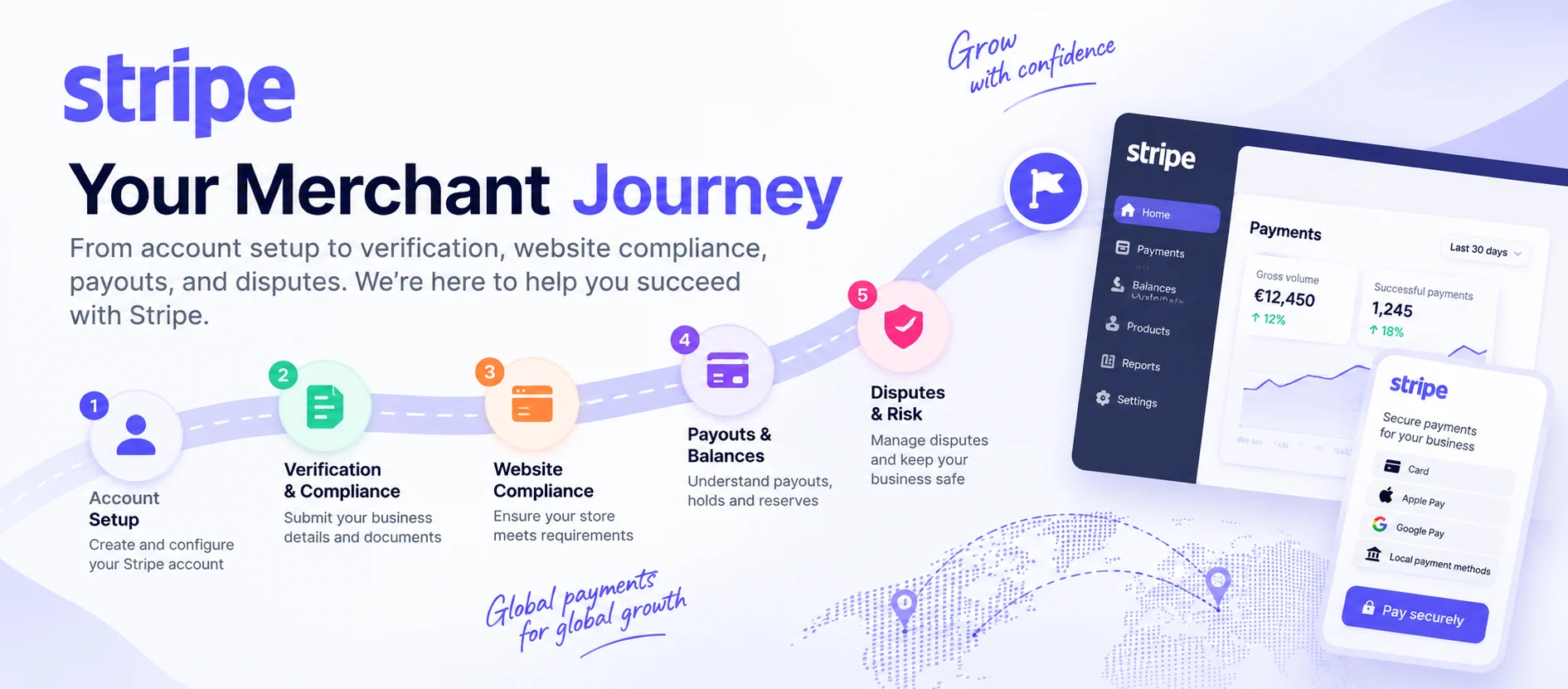
Stripe readiness is not one task. It moves from account setup into business verification, website evidence, payment risk controls, payout operations, and dispute handling.
Setup
Business details
Verification
Website compliance
Risk controls
Payouts
Disputes
Guide cluster
These articles are planned as a practical Stripe content cluster. The child pages are coming soon, so this hub shows the recommended URLs without linking to pages that do not exist yet.
Prepare your Stripe account with accurate business details, payment settings, website information, and launch checks.
Read guideUnderstand merchant responsibilities for Stripe payment processing, verification, fraud, disputes, refunds, payouts and reserves.
Read guideUse separate Stripe accounts for different stores, brands or websites while keeping the same underlying company represented accurately.
Read guideEnter the right legal business name, structure, registration number, tax ID, owners, representatives and website disclosures before verification.
Read guideCheck which ecommerce business types can use Stripe, which models need additional review, and what to verify before processing.
Read guideReview common risk triggers including verification gaps, prohibited products, website issues, disputes, fulfilment concerns, and unusual volume changes.
resources/guides/stripe/account-restrictions-closures
Prepare company documents, owner details, tax information, store links, invoices, supplier evidence, and fulfilment records before review.
resources/guides/stripe/verification-checklist
Understand pending balances, payout schedules, payout pauses, reserves, negative balances, and funds held during account reviews.
resources/guides/stripe/payouts-holds-reserves
Learn what evidence ecommerce merchants should keep, including tracking, delivery proof, refund records, customer messages, and fraud checks.
resources/guides/stripe/disputes-chargebacks
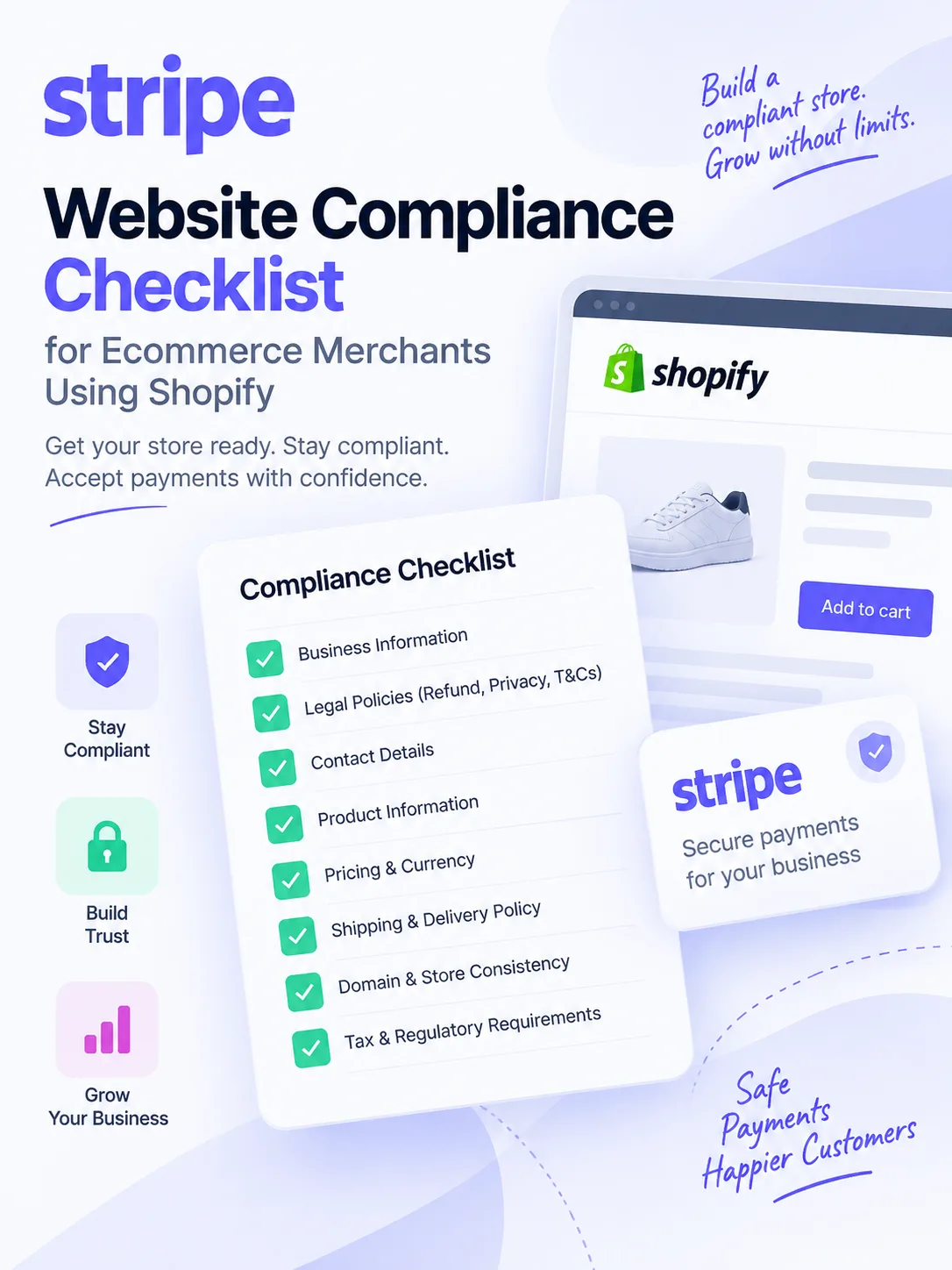
Use a practical checklist for policies, contact details, product descriptions, pricing, domain consistency, and business information.
resources/guides/stripe/website-compliance
Where to start
Choose a path based on what is happening in your store right now.
Website readiness
A consistent, transparent ecommerce website helps payment processors understand what you sell, how customers contact you, and how orders are fulfilled. Use this checklist before opening live payment volume.
These existing guides, tools, and blog posts can help with payment readiness, account risk, Shopify payments, and gateway decisions today.
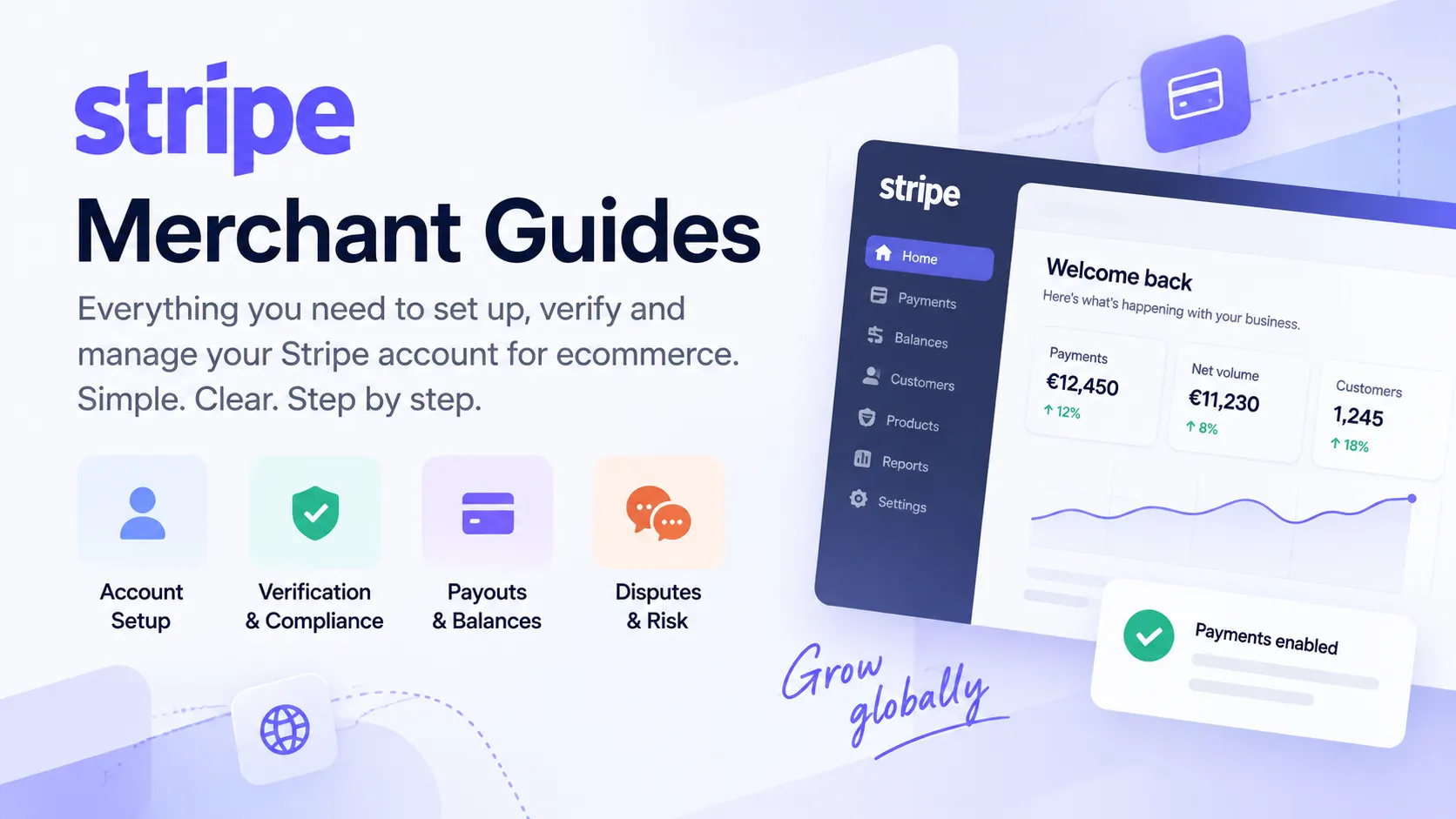
This page now uses live Stripe guide visuals for the merchant dashboard, merchant journey, and website compliance sections.
The images use descriptive alt text and stable aspect ratios so the page remains accessible and responsive.
Yes. The hub is written for ecommerce merchants, especially Shopify store owners who use Stripe or are preparing to use Stripe as part of their payment setup.
Yes. Merchants should prepare Stripe account details, website policies, product information, support details, fulfilment records, and business documents before accepting live payments.
Yes. Payment processors can review accounts after activity begins, especially when business details, transaction patterns, website information, disputes, or fulfilment records need additional checks.
Consistency is one of the most important areas. Your Stripe account, legal entity details, public website, product information, customer support details, and store policies should all match the way your business operates.
No. CartDNA helps ecommerce merchants improve payment readiness and payment infrastructure. Stripe remains the payment processor when a merchant uses Stripe to accept payments.
This guide is for general merchant education and is not legal, financial, or compliance advice. Always review Stripe's official documentation and your account requirements.
Stripe readiness is only one part of ecommerce payment operations. CartDNA helps merchants think through payment methods, checkout readiness, risk controls, and international payment coverage.