Nabeyond ltd t/a CartDNA is a CartDNA is a Shopify Payment App Development Partner
Expand into more countries with fewer checkout issues. Build a payment setup that supports local methods, multiple currencies, stronger approval rates, and lower friction at every step.

A scalable international payment setup gives Shopify merchants lower checkout friction, higher approval rates, and faster entry into new markets
Match buyer expectations with local methods
Reduce failed payments with better routing
Show local currencies at checkout
Scale across markets without tool sprawl
Selling globally is not just a traffic problem. It is a payment problem too. You can have a strong product and solid demand, yet still lose revenue when buyers do not see trusted payment options, local currency, or a smooth checkout flow. International payment scaling helps you remove these blockers. It gives your business the structure needed to support more markets, better conversion, and stronger long-term margin.
As you enter new regions, payment complexity rises fast. Approval rates can drop. Fraud rules change. Currency handling gets harder. Customer trust becomes more fragile. A strong payment setup protects growth before these issues slow you down.
Buyers trust familiar ways to pay. Cards help, but cards alone rarely give the best result in every country. Local methods often remove hesitation and improve completion, especially on mobile devices and in bank-led markets.
💡 Add the top local method in each priority market before you scale media spend there.
Currency confusion slows decisions. When buyers see a foreign amount, they pause. When their bank applies unexpected conversion, trust drops. Multi-currency payments make the total feel clear and familiar from the start.
Cross-border payments ecommerce often fails because routing, fraud settings, and issuer rules vary across regions. Better infrastructure helps you process more payments successfully without forcing your team to patch issues market by market.
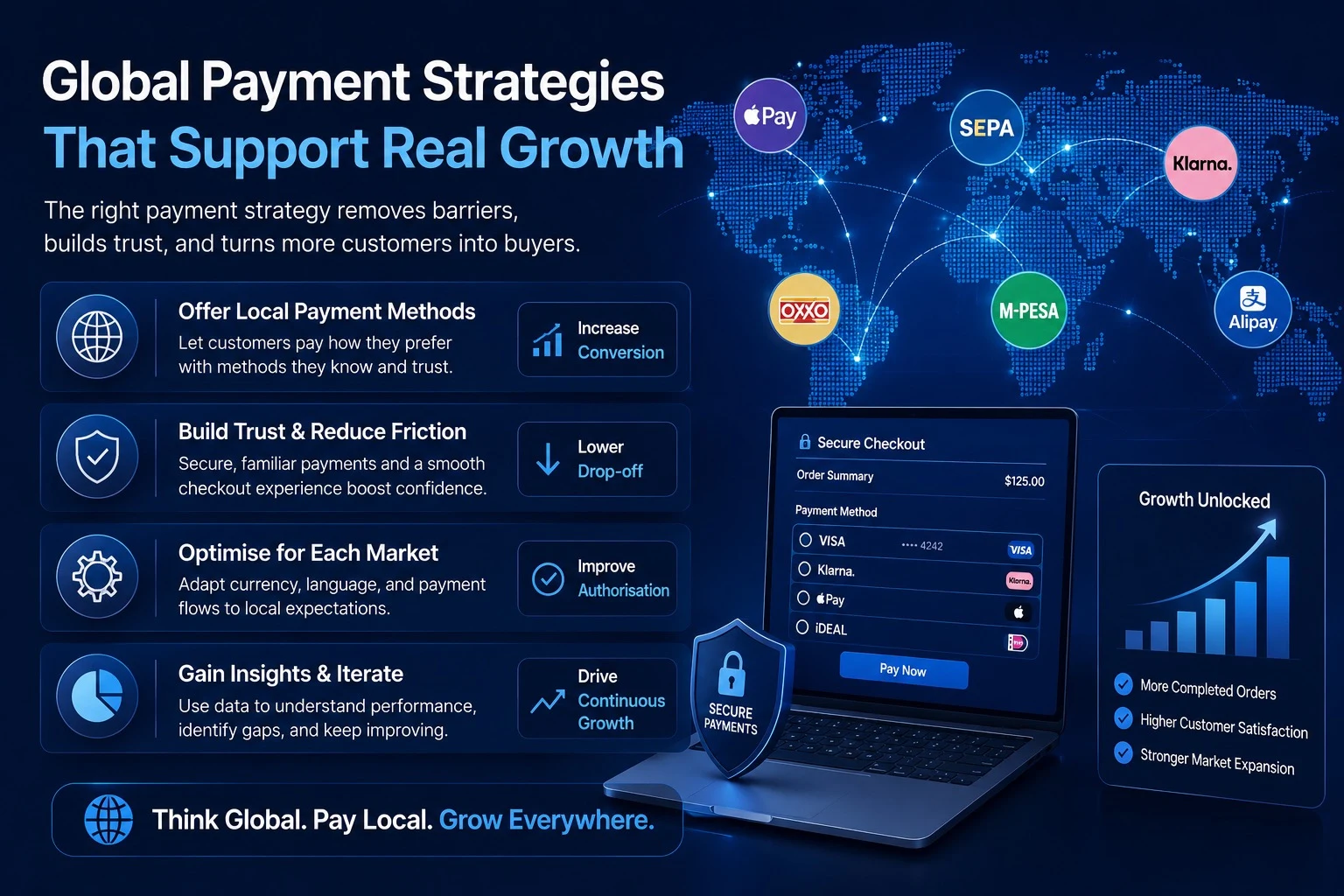
A comprehensive global payment strategy combines local payment methods, multi-currency support and smart routing — giving Shopify merchants the infrastructure to convert buyers in every market
Your checkout should feel local to the buyer, but your backend should stay simple for your team. That means centralising reporting, risk visibility, and payment management while still serving the right options to each country.
Some elements must change by market because they directly affect whether people complete their purchase. Payment methods, currency display, language cues, and trust signals should all match local expectations as closely as possible.
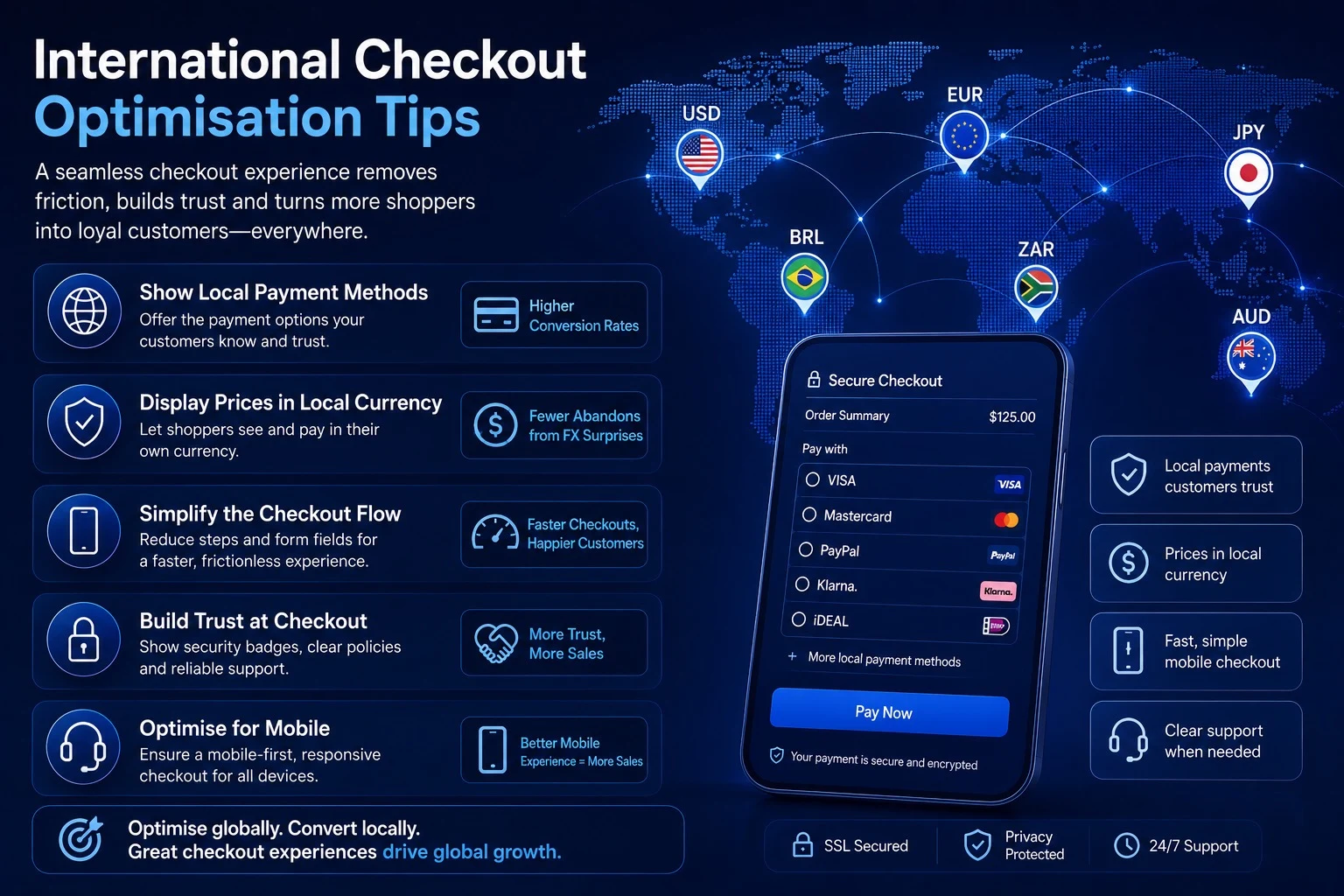
Optimising checkout for international buyers means offering the right payment method, in the right currency, at the right moment — proven to lift conversion across every market
Many cross-border buyers pay on mobile
Slow forms and redirects hurt conversion
Reduce manual effort for the buyer
Recover soft declines where appropriate
Familiar options improve trust fast
Over-blocking can kill good orders
These mistakes can quietly drain revenue. You may still see orders coming in, but efficiency drops. Better payment structure helps you keep more of the demand you already paid to acquire.
Higher approval rates
Lower checkout abandonment
Better margin control
Faster country launch readiness
A mature setup does more than process payments. It helps you launch new markets faster, adapt to local demand, and make better decisions with cleaner data. That is what supports durable global growth.
Build a checkout that fits more countries, more currencies, and more customer expectations. Improve approval rates. Reduce payment failures. Grow revenue with a stronger international payment strategy.
