Nabeyond ltd t/a CartDNA is a CartDNA is a Shopify Payment App Development Partner
Europe is not one payment market. It is a group of very different buyer habits, trust signals, and checkout expectations. When you match local payment methods to local customer behaviour, you reduce friction, improve trust, and increase completed orders across key European markets.
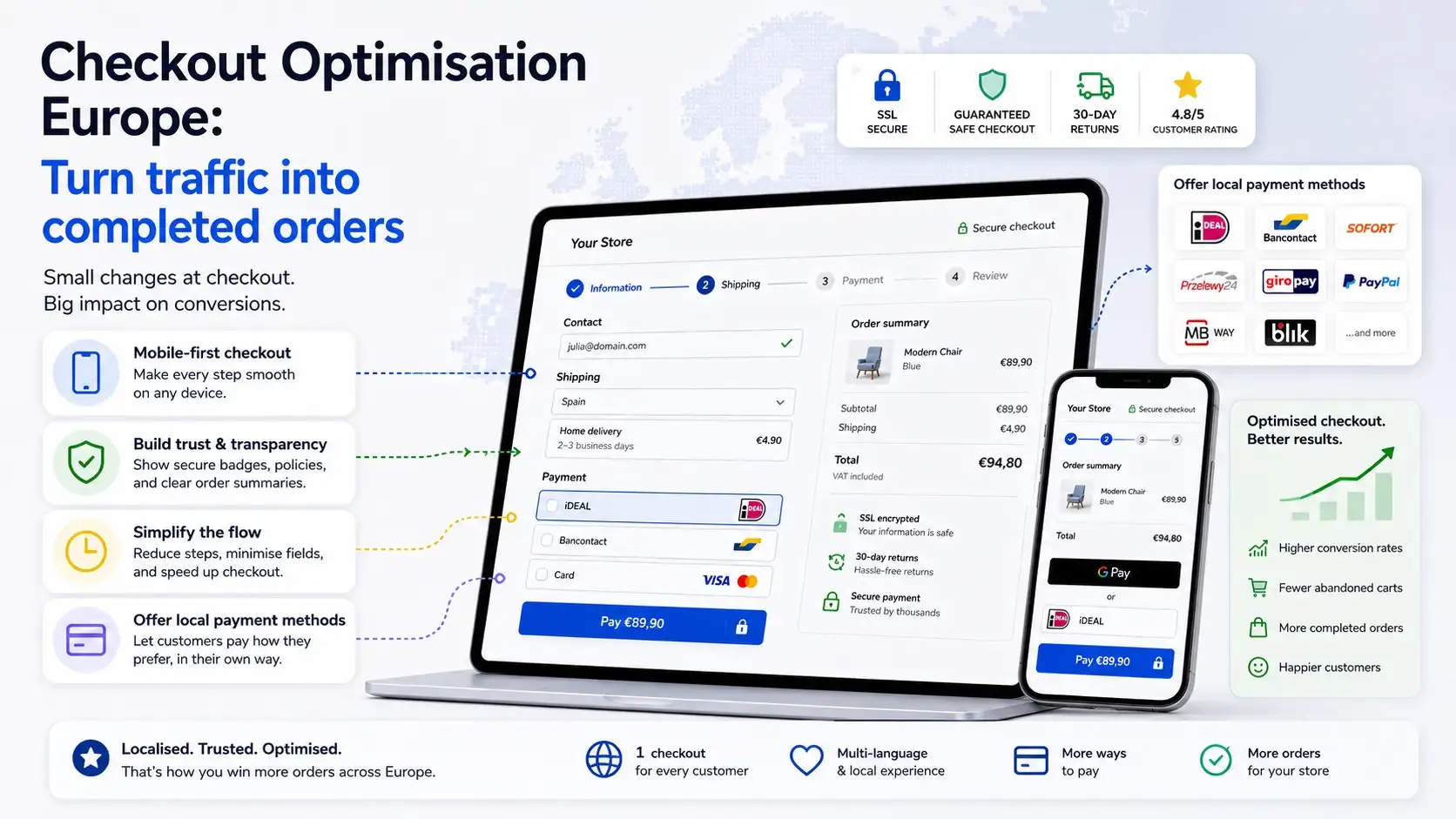
European buyers choose familiar payment methods. Match their expectations for higher conversion.
Familiar payment options signal legitimacy and reduce checkout hesitation.
Local methods often mean saved data or direct banking. This reduces friction and abandonment.
When their preferred method is available, more buyers complete. Makes the process smoother.
If your checkout only offers generic card payments, you are likely losing sales in Europe. Buyers want familiar payment options. They trust what they know. When your store shows the right method for the right market, checkout feels easier, safer, and faster. That often means better conversion with less effort.
Europe has strong ecommerce demand, but payment behaviour changes from one country to another. A Dutch buyer may expect iDEAL. A Polish buyer may prefer BLIK. A German customer may trust PayPal or invoice-based options more than cards. Payment familiarity shapes confidence at the final step of checkout.
If the preferred method is missing, many customers leave without completing the purchase. This is why local payment methods Europe strategies matter. They help you reduce friction, improve trust, and support better online payments Europe performance across desktop and mobile journeys.
You cannot treat Europe as one checkout template. Each market has different payment habits, risk expectations, and user journeys. The best approach is to prioritise payment methods by country and show the most relevant options first.
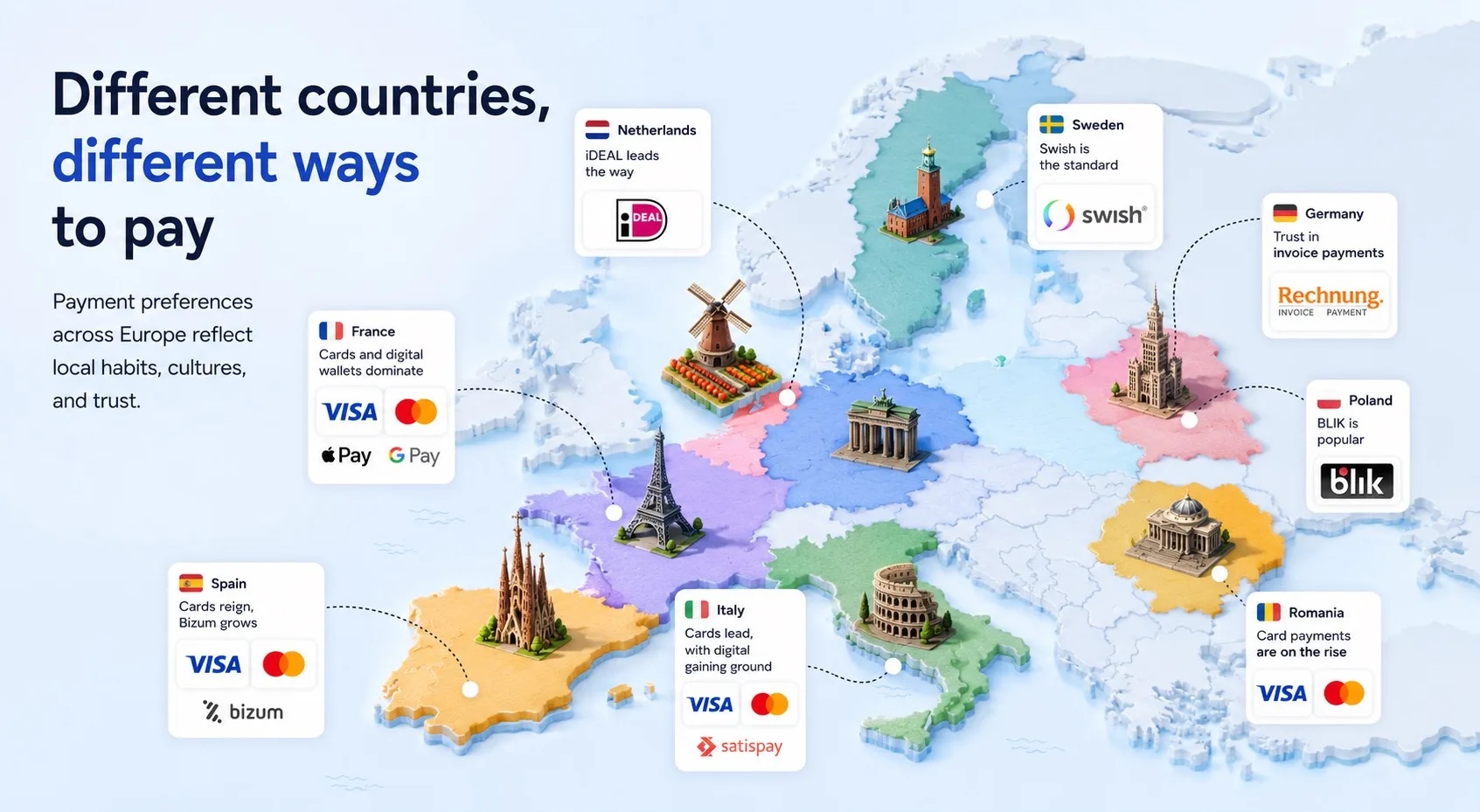
Dutch shoppers expect fast bank-based payment. iDEAL is familiar, simple, and trusted. If you sell into the Netherlands, offering iDEAL is often one of the quickest ways to improve ecommerce payments Europe performance.
German buyers often care deeply about security, flexibility, and control. PayPal performs strongly. Klarna and invoice-style experiences can also help reduce friction for shoppers who want reassurance before paying.
French buyers use cards heavily, but local preference and user confidence still shape results. Clear checkout design, strong trust cues, and local language support can improve payment preferences Europe outcomes.
Polish ecommerce buyers often expect quick, mobile-friendly local payment options. BLIK stands out because it is fast, recognised, and designed for local buyer behaviour.
In Nordic markets, buyers often expect simple digital payment flows with very little friction. Fast-loading checkout, flexible methods, and strong mobile usability all matter.
While cards still play a major role, pay by bank is growing because it can cut fees and reduce chargeback exposure. For merchants, this can improve conversion and payment efficiency at the same time.
The right mix depends on where you sell, but these methods often deserve early priority when building a stronger European checkout.
Still essential across Europe. They remain a baseline option, but cards alone are rarely enough for strong regional coverage.
Widely recognised. Strong for trust. Useful when buyers want speed and familiar buyer protection.
Critical for the Netherlands. A high-priority local method for Dutch sales.
Highly relevant in Poland. Useful for mobile-heavy shopper journeys.
Helpful in markets where shoppers want more payment control or later-pay flexibility.
A growing option in several European markets. Attractive for lower fees, direct account-based payments, and reduced chargeback risk.
Often useful in specific markets where trust comes from local banking flows.
The payment method matters, but so does the way you present it. Even strong options can underperform inside a cluttered or confusing checkout. Good checkout optimisation Europe work is about speed, clarity, and trust.
Put the most likely payment options at the top. Reduce scanning effort. Help buyers choose quickly. Use shopper location, currency, or market rules to make the checkout feel more local and less generic.
A large share of European traffic comes from phones. Use a layout that stays easy to tap, fast to load, and simple to understand. Avoid heavy blocks, confusing labels, or unnecessary steps that slow payment completion.
The payment step should feel calm and focused. Keep supporting text helpful but brief. Avoid clutter. Make labels clear. Show trust cues. Help the buyer move forward without second guessing the process.
Use local currency where possible. Show relevant payment logos. Keep language clear. Explain refunds, delivery, and security in plain terms. Small trust signals can have a real effect on abandoned checkout rates.
Many merchants lose sales not because the product is weak, but because the last step feels unfamiliar or frustrating. Fixing payment mix and checkout design often creates one of the fastest paths to better conversion.
Check your top countries, revenue sources, and checkout drop-off by market. This tells you where local payment support will have the greatest commercial impact first.
Start with the methods buyers already trust in those countries. Focus on the highest-value gaps instead of trying to add everything at once.
Test method order, mobile layout, trust signals, and payment labels. Small UX changes can improve completed orders without changing your product or pricing.
Once the first group performs well, extend into more European markets using real buyer data and checkout performance trends.
CartDNA helps you connect Shopify stores with a wider range of local and alternative payment methods. That gives you more flexibility when adapting checkout to local buyer expectations across Europe.
With the right setup, you can:
The answer depends on your target markets. Cards and PayPal remain important, but local methods such as iDEAL, BLIK, and market-specific bank payment options often play a major role in conversion.
Local methods feel familiar. Familiarity increases trust. When buyers see the option they already use, they are more likely to complete checkout instead of abandoning the basket.
Start with your traffic and sales data. Identify your top countries. Then match your payment mix to local buyer behaviour, mobile usage, and trust patterns in those markets.
Review your payment step. Check which methods you show, what order they appear in, and where users drop off. Payment relevance and clarity often create quick wins.
You do not need every payment method. You need the right ones in the right markets, shown in the right order, inside a checkout that feels fast and local.
Ready to improve checkout performance across Europe?
When your checkout matches local expectations, more shoppers complete their purchase. That means fewer abandoned baskets, better trust, and stronger revenue from European markets.
