CartDNA is a Shopify Payment App Development Partner

CartDNA Logo
Payment Gateway Comparison ยท Ecommerce Payment Solutions ยท Choose Payment Gateway

How to Choose the Best Online Payment Gateway for Your Business

The best payment gateway is not the most popular one โ€” it is the one that fits your business model, your customers' preferred payment methods, and the markets you are selling into. Aggregators like Stripe suit startups. Direct merchant accounts suit scaling brands. Local PSPs win in specific geographies. This guide gives you the framework to choose correctly, not just confidently.
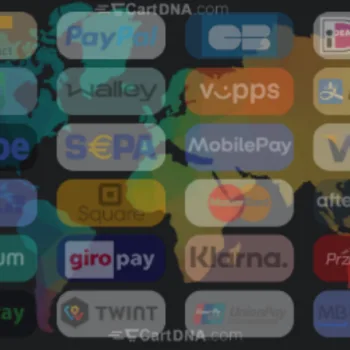
All gateway types clearly explained
Decision framework by growth stage
Fees, conversion and fraud factors covered
Local payment methods included
Aggregators like Stripe are ideal for startups โ€” instant setup, no merchant account negotiation
The wrong gateway can reduce conversion by 15โ€“30% in markets with dominant local payment methods
Enterprise merchants use multi-PSP orchestration to balance approval rates and cost
Local PSPs consistently outperform global gateways for conversion in specific geographies
How to choose the best online payment gateway for ecommerce โ€” comparison guide covering aggregators, direct merchant accounts, local PSPs, and BNPL providers by growth stage 2026

The best payment gateway depends on your growth stage, geography, and customer mix โ€” not on which provider has the best marketing or the highest search ranking

What 'Best' Actually Means When Choosing a Payment Gateway

The term 'best payment gateway' is searched tens of thousands of times each month โ€” and most guides that try to answer it get it wrong. They rank gateways by ease of setup, brand recognition, or affiliate commission. The factor that actually matters โ€” fit for your specific business model, growth stage, and geography โ€” rarely appears.

A startup selling digital goods in the US and UK has completely different needs to a scaling D2C brand entering Germany, the Netherlands, or Brazil. The gateway that processes $100 million a day for a large enterprise is not automatically the right choice for a Shopify store with 200 orders a month. This guide cuts through the noise with a framework for making the right call at the right point in your growth, so your checkout converts at the highest rate your market allows.

The four factors that determine whether a gateway fits your business

  • Supported countries and payment methods โ€” a gateway that does not support your customers' preferred local methods will lose sales at checkout, regardless of how strong the rest of your stack is
  • Fee structure and cost at scale โ€” aggregator rates are acceptable at low volume, but direct merchant account rates become significantly cheaper once you pass $50K/month in processing
  • Approval rate and decline handling โ€” some gateways have stronger acquiring relationships in specific regions, delivering materially higher approval rates for the same card types
  • Integration complexity and time-to-market โ€” the right gateway at your growth stage balances control with the speed you need to start converting revenue today

The Four Types of Payment Gateway โ€” and When Each One Is Right

Gateways are not all built the same way. Understanding the category your chosen provider falls into is the most important factor in predicting whether it will work for your business model, growth stage, and geography.

Payment Aggregators โ€” Stripe, PayPal, Square

Aggregators bundle merchants under a shared master merchant account. You share infrastructure with thousands of other businesses. This is why you can sign up in minutes and start processing the same day โ€” underwriting happens at the aggregator level, not for your business individually. Aggregators are the fastest way to start accepting payments, but the trade-off is less control and higher per-transaction fees.

Best for

  • โ€ข Startups and early-stage businesses who need to start processing within hours without navigating a full merchant account application or underwriting process
  • โ€ข Low-volume merchants where the higher per-transaction rates are acceptable and the operational cost of managing a direct merchant account is not yet justified
  • โ€ข Businesses selling globally who need Stripe's 135+ currency support and broad country availability from day one without separate banking relationships in each market

Limitations to plan for

  • โ€ข Higher per-transaction fees โ€” typically 1.4%โ€“2.9% plus a fixed fee โ€” that become expensive at scale above $50K/month compared to direct merchant account alternatives
  • โ€ข Account holds and fund reserves are more common โ€” aggregators apply risk controls across all their merchants, and your account can be frozen or funds held without direct recourse
  • โ€ข No control over your acquiring relationship โ€” you cannot negotiate rates, switch acquirers, or route transactions by performance across different regions

Direct Merchant Accounts โ€” Adyen, Worldpay, Bank Acquiring

A direct merchant account gives you a dedicated relationship with an acquiring bank. You are underwritten individually โ€” stricter approval criteria, but significantly more control over your payments infrastructure once approved. The relationship is yours, the rates are negotiated, and the acquiring bank knows your business specifically, not just your category.

Best for

  • โ€ข Scaling and enterprise merchants with consistent monthly volume above $50K who benefit materially from negotiated interchange-plus pricing compared to aggregator flat rates
  • โ€ข Businesses that need direct acquiring relationships for chargeback management, reserve control, and multi-currency settlement optimisation across their trading geographies
  • โ€ข Merchants in higher-risk verticals who cannot rely on aggregators and need an acquiring bank that has specifically underwritten and approved their business model

Limitations to plan for

  • โ€ข Longer onboarding โ€” direct merchant accounts typically take 2โ€“4 weeks for underwriting and approval, not the hours that aggregators offer
  • โ€ข Minimum volume requirements โ€” most direct acquirers have monthly processing thresholds and are not a practical option for low or early-stage volume merchants

Local PSPs โ€” Mollie, iDEAL, BLIK, Klarna, Multibanco

Local PSPs specialise in specific markets and payment methods that global gateways do not serve well. In the Netherlands, iDEAL processes 70โ€“75% of all online transactions. In Poland, BLIK is the dominant mobile payment method. In Portugal, Multibanco reference payments are standard practice. A global gateway with no local PSP support will structurally underperform in these markets โ€” and no amount of optimisation on other parts of the checkout will compensate.

Best for

  • โ€ข Businesses expanding into specific European, LATAM, or APAC markets where local payment methods dominate checkout behaviour and card-on-file is not the default
  • โ€ข Improving conversion rates in markets where customers actively avoid card-based checkout flows and prefer bank-based or voucher payment methods
  • โ€ข Complementing a global gateway with local coverage โ€” add Mollie for the Netherlands, Klarna for DACH markets, alongside your existing primary gateway rather than replacing it

Limitations to plan for

  • โ€ข Geography-limited โ€” local PSPs are effective in their home market but have no value outside of it; you still need a primary global gateway alongside every local integration
  • โ€ข Additional integration overhead โ€” each local PSP requires separate onboarding, API integration, reconciliation, and ongoing relationship management

Buy Now Pay Later โ€” Klarna, Afterpay, Scalapay

BNPL providers are specialist payment method layers, not full payment gateways. They sit alongside your primary gateway and offer customers the ability to split or defer payments. BNPL consistently increases average order value and improves checkout conversion for fashion, homewares, and mid-to-high ticket purchases โ€” particularly in European markets where Klarna has significant consumer adoption.

Best for

  • โ€ข Fashion, lifestyle, and home goods merchants with average order values above ยฃ50โ€“100 where BNPL drives measurable conversion uplift and AOV increase
  • โ€ข Businesses selling to younger demographics (18โ€“34) where BNPL has become a preferred default payment option and its absence is noticed at checkout

Limitations to plan for

  • โ€ข BNPL is a payment method, not a full gateway โ€” you still need a primary gateway for all card and digital wallet transactions alongside any BNPL integration
  • โ€ข Each BNPL provider has its own merchant fees, typically 2โ€“6% per transaction, plus credit approval processes and geographic availability that vary by market

Payment Orchestration โ€” Multi-PSP Routing for Enterprise Scale

Payment orchestration layers (such as Primer, Spreedly, or custom-built routers) sit above multiple gateways and route each transaction to the best available PSP based on real-time factors: approval rate, processing cost, geographic performance, and gateway availability. This is enterprise-level infrastructure that delivers measurable improvements in both approval rate and total processing cost.

Best for

  • โ€ข Enterprise merchants processing ยฃ1M+/month who route transactions intelligently to maximise approval rates and minimise total processing cost across their PSP portfolio
  • โ€ข Businesses operating across 5+ countries who need different PSPs for different geographies managed from a single integration layer without per-market technical overhead
  • โ€ข Merchants who need gateway failover โ€” if one PSP goes down or declines spike, traffic automatically routes to the next-best option without manual intervention

Implementation requirements

  • โ€ข Requires multiple active merchant account relationships before orchestration delivers value โ€” you need PSPs to route between before the infrastructure makes economic sense
  • โ€ข Higher implementation complexity โ€” orchestration is an enterprise solution and typically requires dedicated payments engineering resource and ongoing optimisation

CartDNA helps Shopify merchants identify the right gateways and local PSPs to add before investing in orchestration infrastructure โ€” so your routing layer has quality options to work with from day one.

Payment Gateway Comparison: Fees, Speed, and Business Fit

Gateway TypeTypical FeeApproval SpeedBest Business Fit
Stripe / PayPal (Aggregator)1.4%โ€“2.9% + fixed feeSame dayStartups / global digital goods
Adyen / Worldpay (Direct)Interchange + 0.3โ€“0.5%2โ€“4 weeksScaling merchants / enterprise
Mollie / Local PSPMarket-specific rates3โ€“7 daysEuropean regional markets
Klarna / Afterpay (BNPL)2โ€“6% per transaction1โ€“2 weeksFashion / high-AOV verticals
Orchestration LayerPlatform fee + PSP ratesVaries by PSPEnterprise / multi-market

The fee comparison trap: Comparing headline rates without accounting for approval rates gives you a misleading picture of total cost. A gateway with a 0.5% lower rate but a 5% lower approval rate will cost you far more in declined revenue than it saves in fees. Always model approval rate alongside transaction cost.

What Actually Affects Checkout Conversion โ€” and What to Fix

Your payment gateway choice directly affects your checkout conversion rate โ€” not just your processing cost. The wrong gateway in the wrong market can reduce conversion by 15โ€“30% simply by not offering the payment methods your customers expect to see at checkout. This is the most underestimated factor in gateway selection.

  • Support local payment methods โ€” customers in markets with dominant local methods (iDEAL in Netherlands, BLIK in Poland, Multibanco in Portugal) abandon checkouts at materially higher rates when those methods are absent from the payment options they see
  • Optimise for approval rate, not just cost โ€” a gateway with strong acquiring relationships in your core markets will approve more transactions from the same card pool than a gateway with weaker regional presence
  • Implement 3D Secure correctly โ€” 3DS is mandatory in many European markets under PSD2; poorly implemented 3DS flows that add unnecessary friction cause measurable checkout drop-off without meaningfully improving security outcomes
  • Negotiate your rates once you have volume โ€” aggregator rates are non-negotiable at launch, but direct merchant account rates become available once you pass $50K/month and can reduce your processing cost by 30โ€“50%

Fraud protection is the other half of the conversion equation. Overly aggressive fraud filters block legitimate transactions โ€” a problem just as costly as actual fraud. The best gateway configurations use machine learning-based fraud scoring with manual review thresholds calibrated by market, not blunt velocity rules that catch clean transactions alongside fraudulent ones.

Your Payment Gateway Decision Framework: Choose by Growth Stage

Use this framework to select your gateway based on where your business is today โ€” and where it will be in 12 months. The right answer changes as your volume, markets, and complexity grow. Plan for your next stage, not just your current one.

Startup (0โ€“$10K/month): Use Stripe or PayPal as your primary gateway โ€” fastest setup, no minimum volume, global coverage from day one without a merchant account application
Early growth ($10Kโ€“50K/month): Add local payment methods for your core markets โ€” iDEAL for Netherlands, Klarna for DACH, BLIK for Poland, alongside your primary gateway
Scaling ($50Kโ€“200K/month): Explore direct merchant account options with Adyen or regional acquirers to access interchange-plus pricing and negotiated rates that aggregate rates cannot match
Multi-market expansion: Add a backup PSP in each core market โ€” gateway redundancy ensures you never lose revenue to a single provider's downtime or a regional decline spike
High volume ($200K+/month): Evaluate payment orchestration to intelligently route transactions and maximise approval rates across your full PSP portfolio
Enterprise: Build a dedicated payments function or work with a specialist โ€” at scale, payments infrastructure is a revenue centre with measurable ROI, not just a cost to minimise

The Right Gateway Stack for Your Business โ€” Practical Recommendations

Recommended setup for scaling Shopify merchants

  • Primary gateway: Stripe for setup speed and global coverage, Adyen for cost efficiency at scale above $50K/month โ€” the choice depends on your volume, not your preference
  • Local payment methods: Add market-specific PSPs for each geography with meaningful traffic โ€” Netherlands, Germany, Poland, and Portugal all have dominant local methods that lift conversion
  • BNPL: Add Klarna or Afterpay for fashion, lifestyle, and home goods verticals where BNPL drives measurable uplift in conversion and average order value in European markets
  • Fraud layer: Implement dedicated fraud tooling (Signifyd, Kount, or gateway-native ML scoring) configured separately from your gateway's default rule set for your specific product mix

Add when volume justifies it

  • Payment orchestration layer (Primer, Spreedly) once you have 3+ active PSP relationships and sufficient volume to make intelligent transaction routing economically worthwhile

What the right gateway stack delivers

  • Higher checkout conversion โ€” customers see their preferred payment method, reducing abandonment at the point of payment where intent is highest
  • Lower total processing cost โ€” negotiated rates, local PSP fees, and intelligent routing combine to reduce your cost per transaction as volume grows
  • Payment resilience โ€” multiple PSPs with failover routing means a single gateway outage or decline spike never stops your revenue

Frequently Asked Questions

What is the best online payment gateway for a Shopify store?

It depends on your market and volume. For US, UK, and global digital goods merchants, Stripe is typically the fastest to configure and most feature-complete out of the box. For European markets, adding local payment methods via Mollie or native Shopify apps for iDEAL, BLIK, or Klarna significantly improves checkout conversion. At higher volumes ($50K+/month), Adyen's direct acquiring model becomes cost-effective and delivers better approval rates in key markets. The best gateway is the one that matches your geography, volume, and customer payment preferences.

How do payment gateway fees affect my profit margin at scale?

Significantly. Transaction fees on aggregators like Stripe run 1.4%โ€“2.9% plus a fixed fee per transaction. At $10K/month, this is manageable. At $200K/month, the same rate costs $2,800โ€“5,800 per month in fees alone. Direct merchant accounts with interchange-plus pricing can reduce this by 30โ€“50% at that volume. Always model fee impact at your projected 12-month processing volume, not your current volume, when evaluating gateway options.

What is the difference between a payment gateway and a payment aggregator?

A payment gateway is the technology layer that processes card transactions โ€” it connects your store to card networks and acquiring banks. A payment aggregator (like Stripe or PayPal) bundles this technology with a shared merchant account, so you share risk infrastructure with thousands of other merchants. This is why setup is instant. A direct gateway paired with your own dedicated merchant account gives you an individual acquiring relationship โ€” more control, negotiated rates, and better chargeback management, but a stricter 2โ€“4 week onboarding process.

When should I switch from Stripe to a direct merchant account?

When your consistent monthly processing volume exceeds approximately $50,000โ€“100,000. At that level, the difference between Stripe's aggregator rates and interchange-plus rates available through direct acquirers like Adyen or Worldpay becomes material in absolute terms. The onboarding process takes 2โ€“4 weeks and requires business and financial documentation, but the long-term cost savings typically justify the investment from that volume threshold. Plan the switch before you need it โ€” not after your margins become a problem.

Related guides and resources

Ready to Optimise Your Payment Gateway Setup?

CartDNA helps Shopify merchants choose the right combination of payment gateways, local PSPs, and BNPL providers for their markets โ€” so your checkout converts at the highest rate your traffic allows.
