Nabeyond ltd t/a CartDNA is a CartDNA is a Shopify Payment App Development Partner
The wrong payment mix can cost you sales. The right one can reduce friction, increase trust, and help more shoppers finish checkout. Alternative payment methods give your customers better ways to pay, based on how they already shop in different devices, countries, and buying situations.
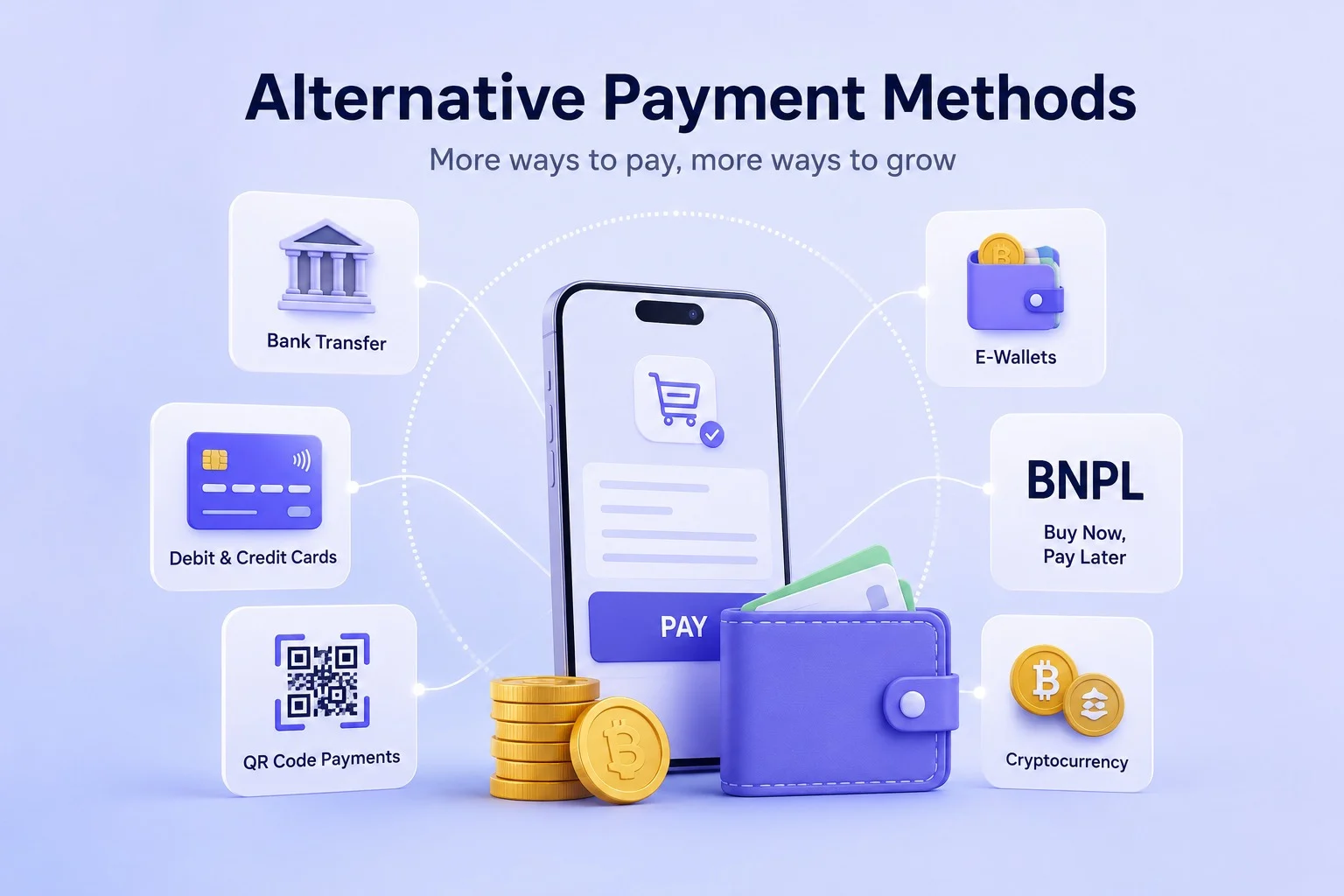
When shoppers do not see a familiar way to pay, they pause. That pause often turns into abandonment. Adding relevant alternative payment methods helps you remove hesitation at the most sensitive step of the customer journey.
The right mix of local methods, wallets, and flexible payment options helps more customers complete purchases. It can also support larger basket sizes and stronger confidence from first-time buyers.
Alternative payment methods are payment options beyond standard credit and debit cards. They include digital wallets, bank-based payments, buy now pay later services, and local payment methods that match how people prefer to pay in specific countries or devices.
Apple Pay, Google Pay, PayPal and similar fast checkout methods.
Pay by Bank, iDEAL, Sofort and other account-to-account methods.
Klarna, Clearpay and similar options for flexible payment timing.
BLIK, TWINT and other region-specific options customers trust.
Payment is not just a back-end function. It shapes user confidence. It affects speed, trust, and completion rate. If your checkout offers only one or two methods, you create unnecessary friction for customers who expected a faster or more familiar option.
Your checkout does not need more complexity. It needs better payment fit.
Customers often trust what they already know. That is why local payment methods matter. A shopper in one country may prefer bank transfer, while another may expect a wallet or regional app. Showing locally relevant methods makes your checkout feel safer and easier.
Buyers are more likely to complete checkout when they see a familiar option used in their market.
Known payment brands reduce doubt, especially for new customers.
Less thinking means less delay. Less delay means more completed orders.
Digital wallets reduce typing, shorten checkout, and improve convenience on small screens. That matters because mobile shoppers are less patient. If your mobile checkout feels long or awkward, even strong buying intent can disappear before payment is complete.
See also:
Reduce cart abandonmentMany ecommerce teams focus on page design, shipping, and product detail. Those matter. But payment strategy is often under-optimised. You can improve results without redesigning everything. Small payment changes can create meaningful conversion gains when they remove friction at the right moment.
Do not overload shoppers with every possible method. Show the right methods in the right order. Relevance wins. Clarity wins. A cleaner payment step usually performs better than a crowded one.
You do not need to guess where the problem is. Your existing store data can point you to the right fixes. Look closely at drop-off patterns, device trends, country-level performance, and payment-step behaviour to find where friction is hurting sales.
Helpful resources:
Conversion is only one side of the opportunity. Some payment methods can also support larger orders. Flexible payment options can reduce hesitation on higher ticket purchases. Faster wallets can also increase completion on quick-buy, low-consideration products.
Flexible options can reduce price hesitation.
Quick payment tools support impulse-driven buying.
Familiar methods help first-time buyers commit.
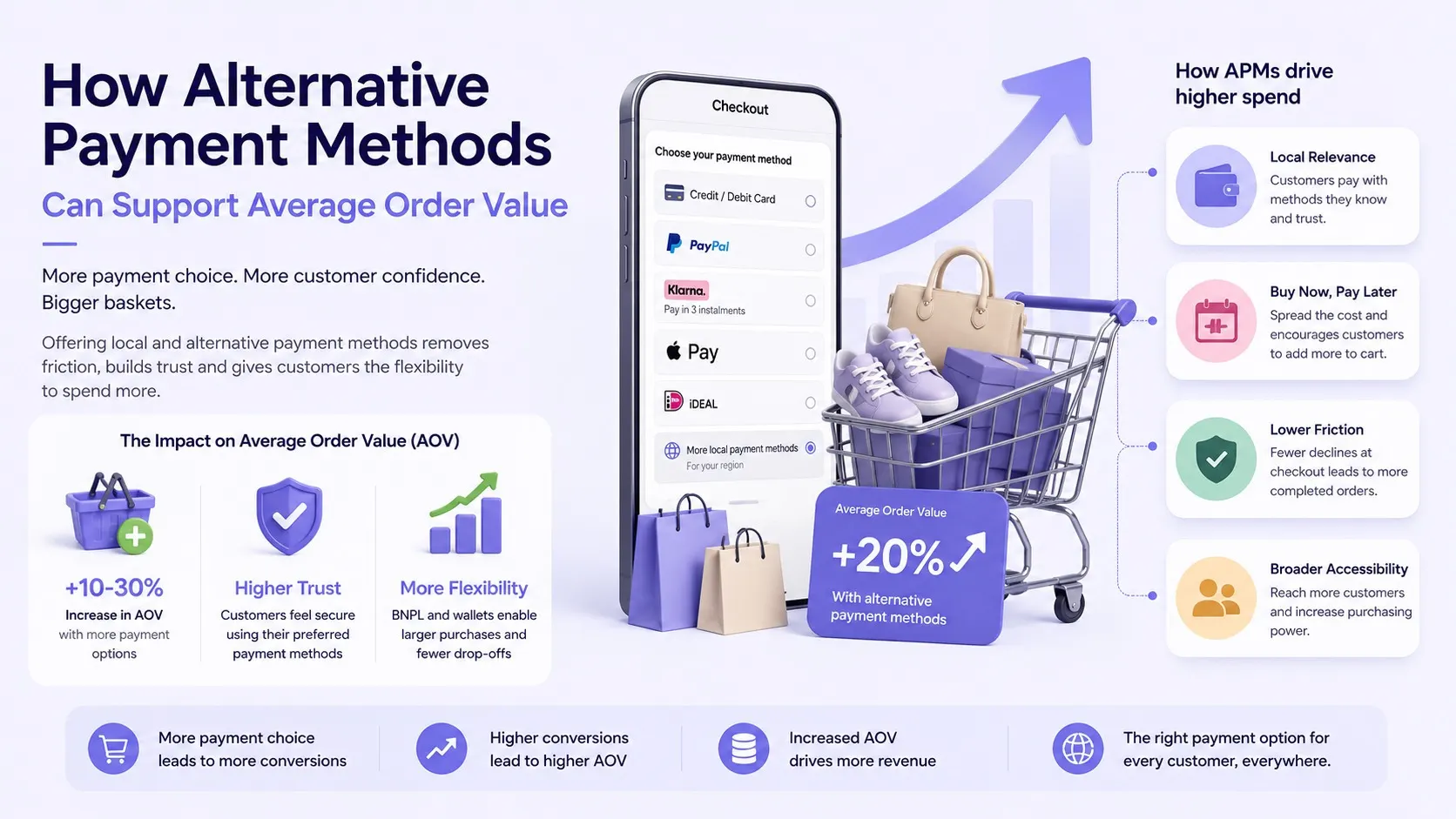
The best setup depends on your audience, average order value, device split, and countries you serve. You do not need every method. You need the mix that fits your customers. Start with broad coverage, then refine based on real checkout data.
You do not always need more traffic to grow revenue. Often, you need a checkout that fits how your customers want to pay. A better payment mix can reduce drop-off, improve trust, and help more shoppers complete their orders.
