Nabeyond ltd t/a CartDNA is a CartDNA is a Shopify Payment App Development Partner
Stripe Account Safety Guide
Protect your revenue before Stripe risk systems flag your account. These 7 practical steps help you reduce fraud, control disputes, secure access, and build a safer payment setup that supports stable ecommerce growth.
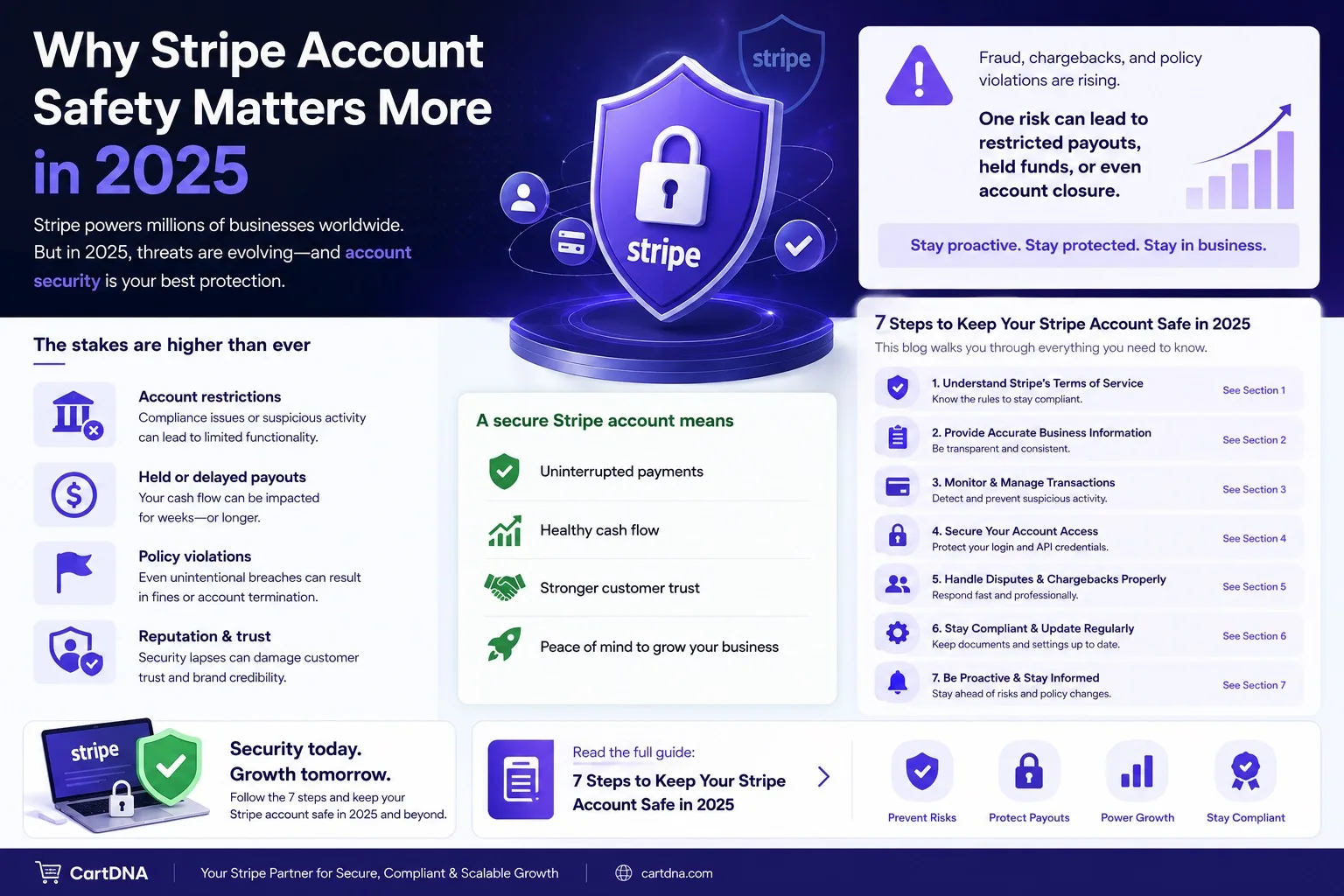
Protecting your Stripe account requires proactive fraud prevention, chargeback management and consistent compliance — follow these 7 steps to stay protected in 2025
Stripe helps ecommerce teams move fast. But risk systems move fast too. A sudden fraud spike, a rising dispute rate, or weak account security can trigger reviews, payment holds, or even a shutdown. That creates revenue loss, support pressure, and customer trust issues.
The good news is simple. Most account problems are preventable. When you use strong Stripe fraud prevention, secure your team access, and monitor payment health closely, you lower risk before it becomes expensive. This guide shows you what to fix first and what to keep watching.
Stripe looks for risk patterns, not just isolated issues. That means a few small problems across fraud, fulfilment, refunds, and customer communication can add up. Many ecommerce teams only react after a warning arrives. By then, the damage is already underway.
Too many chargebacks increase review risk and can lead to account restrictions.
Fast growth without strong risk controls can look suspicious.
Stolen cards and suspicious orders damage payment health.
Missing business details, unclear policies, or risky products raise Stripe risk signals.
A secure Stripe account begins with trust signals. Make sure your legal business details, support email, fulfilment times, refund terms, and product descriptions are clear and consistent. Stripe wants to see a real business with low ambiguity and strong buyer transparency.
Clean setup reduces confusion. Lower confusion means fewer refunds, fewer disputes, and fewer manual reviews.
Weak internal security can destroy a healthy payment account. If a team member shares logins, skips two-factor authentication, or leaves secret keys exposed in code, fraud can happen fast. Stripe will not ignore that kind of risk.
Use separate keys for test and live environments. Audit access every month. Smaller habits reduce major account risk.
PRO TIP
If your team touches payments, support, refunds, or checkout code, review their Stripe permissions. Too much access creates avoidable security risk.
Fraud does not only hurt margin. It also drives disputes, failed payments, and account instability. Strong Stripe fraud prevention should combine platform tools, checkout signals, and manual review rules for suspicious orders.
Disputes often begin with confusion, not crime. A customer forgets the purchase, misses shipping details, or cannot get help quickly. Stripe sees the dispute. Your account absorbs the risk. Strong dispute management means fixing the customer journey, not just fighting chargebacks later.
LOWER DISPUTES = STRONGER ACCOUNT HEALTH
Better product clarity → fewer confused buyers
Better fulfilment updates → fewer *item not received* claims
Better support response → fewer escalated complaints
You cannot protect what you do not track. Daily monitoring helps you spot fraud, conversion issues, unusual payment failures, and rising dispute exposure before Stripe risk systems take action. Fast detection protects revenue and keeps your payment setup stable.
Create thresholds for alerts. Review unexpected spikes fast. Compare changes by campaign, market, payment method, and device type. Risk patterns often hide inside growth data.
Related reading:
The wrong payment setup can increase failed payments, customer hesitation, and suspicious behaviour. Local payment options help legitimate buyers complete checkout smoothly. That reduces friction and can lower avoidable risk signals around payment failures and purchase uncertainty.
A clean customer journey creates better payment quality. Better payment quality supports lower fraud, fewer disputes, and healthier Stripe performance.
Useful internal links:
Many teams wait too long. They hope a fraud spike will settle down or assume a few disputes are normal. That delay can turn a fixable issue into a serious account review. Strong Stripe risk management depends on fast action and clear internal ownership.
Decide who handles fraud reviews, disputes, support spikes, and technical issues. Clear ownership reduces panic and cuts response time.
24-HOUR RISK RESPONSE CHECKLIST
These habits strengthen long-term account health. They are simple, but they work well when done consistently.
Stable operations create stable payment performance. Stripe notices that over time.
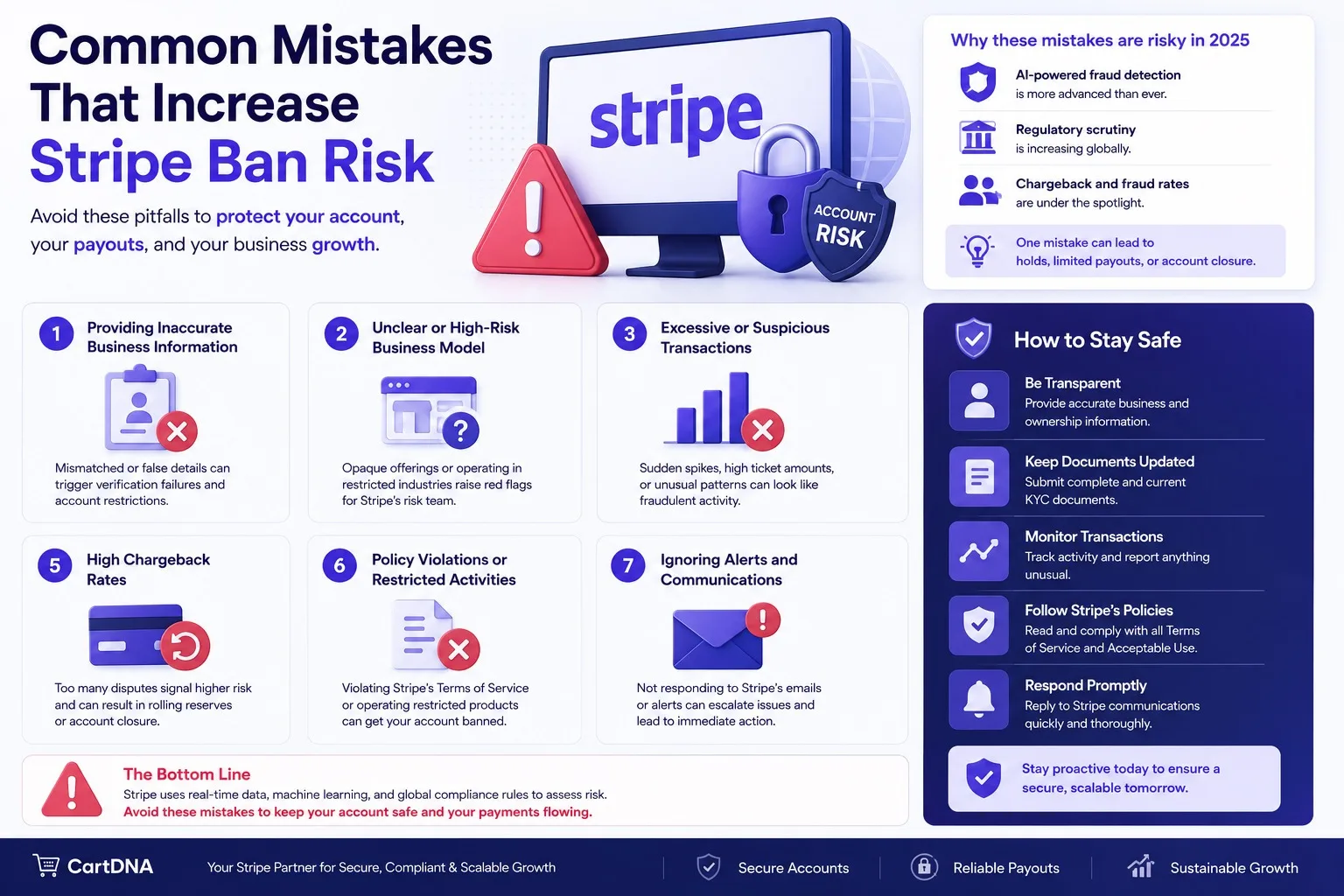
Fast growth sounds good. Uncontrolled growth does not. When volume rises without fraud screening, support capacity, and fulfilment readiness, risk rises with it.
Disputes are signals. They often point to product clarity problems, shipping issues, support gaps, or fraud exposure.
Old staff accounts, exposed keys, and broad permissions create avoidable security gaps that can become expensive very quickly.
Fraud, disputes, and account reviews rarely appear out of nowhere. They build from weak controls, missed signals, and avoidable gaps in your checkout and payment operations. Fixing those gaps now is easier than recovering later.
