
SEPA Payment Types Explained for Ecommerce Growth
Turn bank payments into a profit advantage.
SEPA gives European ecommerce brands lower-cost euro payments, stronger cash flow, and more trust at checkout.
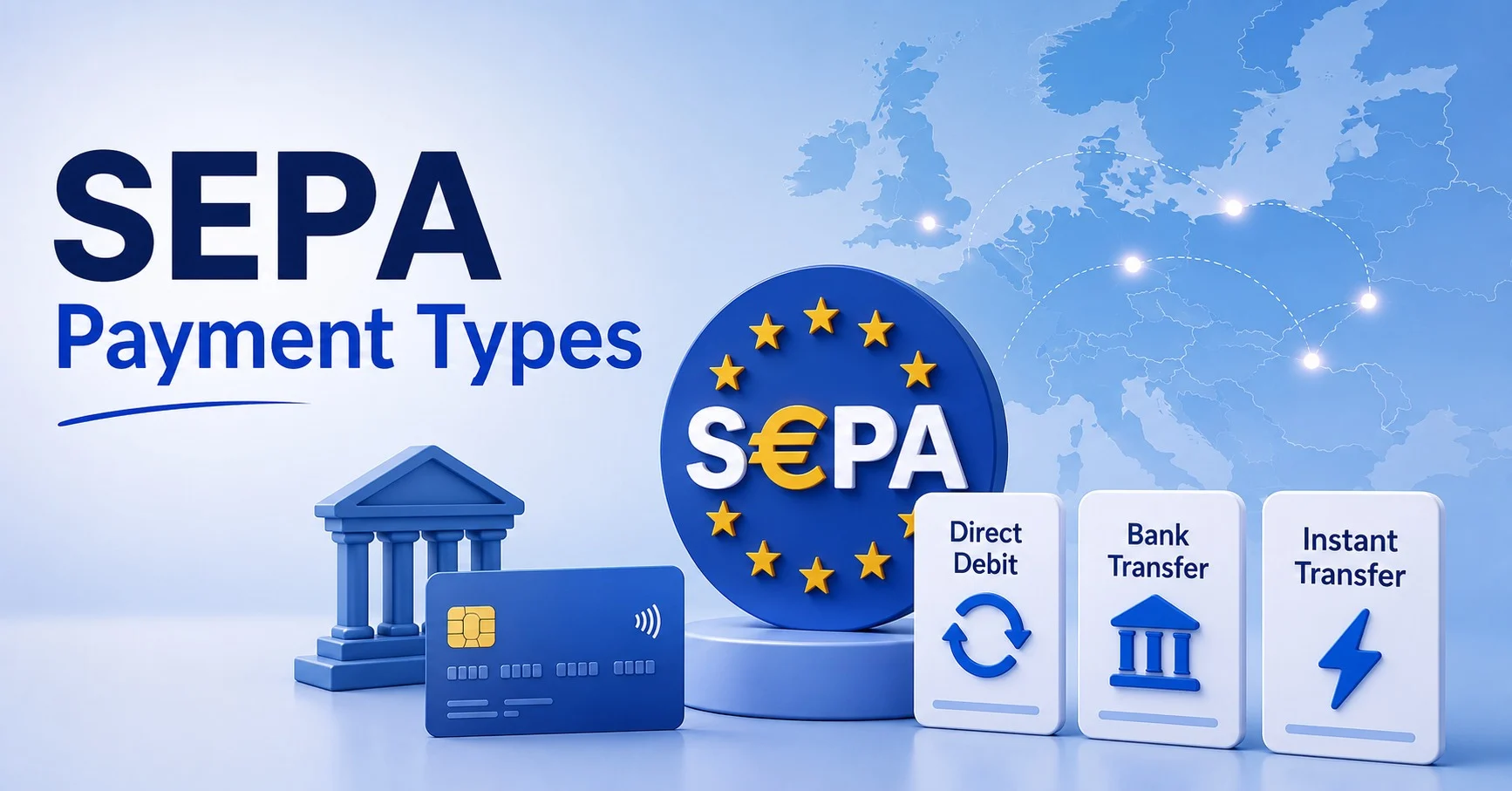
What are SEPA payment types?
They are bank-based euro payment methods used across Europe. Funds move directly between accounts with fewer intermediaries and lower cost than many card flows.
SEPA Credit Transfer
Manual bank transfer for higher-value or invoice-led payments.
SEPA Instant Payment
Real-time transfer with confirmation in seconds.
SEPA Direct Debit
Pull-based collection for one-off or recurring billing.
SEPA bank transfer for Europe
Credit Transfer
The customer pushes the payment from their bank. It works well when trust is high and order value is larger.
Best use cases
- B2B invoices
- Wholesale orders
- High-value ecommerce orders
Why merchants use it
- Very low fees
- No chargebacks
- Strong trust in Europe
SEPA Instant Payment
Real-time euro payments
Funds arrive in seconds, helping merchants confirm orders faster and improve cash flow.
Best use cases
- Digital goods
- Urgent orders
- Account funding
- Fast checkout confirmation
Why it converts better
- Instant confirmation builds trust
- Reduces checkout abandonment
- Improves cash flow immediately
SEPA Direct Debit for ecommerce
Pull payments with customer authorisation
The customer grants a mandate and you collect funds from their bank account, which is ideal for repeat billing.
Explore SEPA Direct Debit for ShopifyOne-time SEPA Direct Debit
Best for one-off payments, set-up fees, and single invoice collection.
- Removes manual steps
- Often improves completion versus manual transfer
Recurring SEPA Direct Debit
Best for SaaS billing, memberships, instalments, and subscription ecommerce.
- Predictable recurring revenue
- Fewer failed payments
- Automated billing at scale
How to choose the right SEPA payment type
Match the method to customer behaviour to lower friction and improve conversion.
Reduce costs with low-cost EU payment methods
Why SEPA often beats cards on margin
Lower fees protect margin as order values grow.
Typical cost comparison
- Card fees: 1.5% to 3%
- SEPA fees: often fixed or under 1%
Real example
- €1,000 via card: about €15 to €30 in fees
- €1,000 via SEPA: about €0.50 to €1 in fees
The difference compounds quickly, especially on higher-value orders.
Explore the conversion impact of alternative payment methodsImprove conversion with euro bank payments online
Practical checkout actions for EU growth
Small checkout changes can lift trust and completion.
Practical checkout tips
- Offer SEPA alongside cards, not hidden behind extra steps.
- Highlight Pay by Bank messaging clearly for EU visitors.
- Explain direct-from-bank security and low friction.
- Use IBAN autofill and clean mandate flows where possible.
- Enable instant payments where PSP and bank coverage allow.
What you gain
- Higher trust from EU customers
- Lower abandonment on high-value orders
- Better approval rates than relying on cards alone
Use SEPA across ecommerce use cases
B2C ecommerce
- Add SEPA Instant for faster checkout confirmation.
- Use Direct Debit where repeat purchases are common.
B2B ecommerce
- Use bank transfer for invoices and larger orders.
- Combine with payment automation to cut admin load.
Subscription models
- Use recurring Direct Debit for predictable revenue.
- Reduce churn caused by expired or failed cards.
Common mistakes to avoid
Fix these to protect both conversion and margin.
- Only offering cards in EU markets.
- Explaining SEPA too late in the checkout flow.
- Leaving bank payments unoptimised on mobile.
- Using weak mandate handling for Direct Debit.
FAQ: SEPA payments explained
What are SEPA payment types?
They include bank transfers, instant payments, and direct debit. They move euro payments directly between bank accounts across Europe under standardised rules.
Is SEPA cheaper than cards?
Usually yes. Card fees are often 1.5% to 3%, while SEPA is typically fixed-price or below 1%, which improves margin.
Which SEPA option works best for subscriptions?
Recurring SEPA Direct Debit is usually the best fit because it automates billing and reduces failed payments.
Can I use SEPA in ecommerce checkout?
Yes. Many ecommerce setups support SEPA for European customers to improve trust, reduce fees, and expand bank-based choice.
Turn payments into a growth lever
If you rely only on cards, you are likely giving away margin. SEPA adds a lower-cost, higher-trust payment layer across Europe.